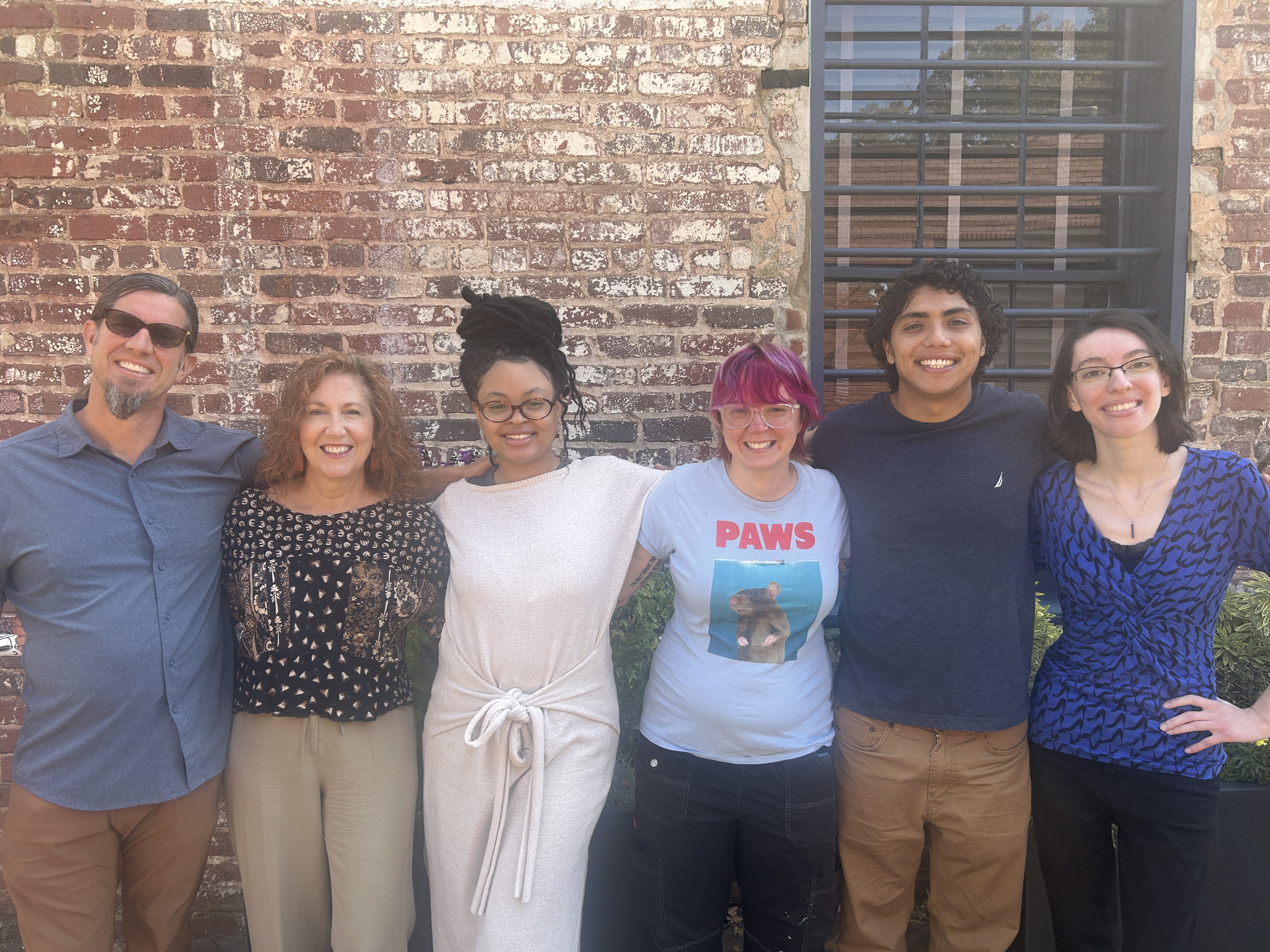
What GCC Means to Communities in Schools Neighborhood Leader

December 10, 2024

I really appreciate all that Georgia Conflict Center does to equip service providers and the community. GCC helps us identify and properly use the right tools to communicate well with each other. Professionally, I have gained tools to help lead residents to express themselves better and understand their emotions. Personally, I was able to identify some areas where improvement was needed when it came to me understanding my emotions better. I also gained a clear understanding of how to identify and express them well. So thank you GCC team for all that you do, and I look forward to our continued collaboration in the community.

other blogs and recommended reading

NJEA Officers, Community Tour Restorative Justice Montclair

“As a teacher in Wayne and a resident and mayor here in Montclair, I could not be prouder of the leadership that the Montclair Education Association, the Montclair Board of Education, and our students, teachers, educational support professionals, and administrators have taken in showing what restorative justice looks like in action,” [President] Spiller said.

Read full article (LINK OPENS IN A NEW TAB) →

“When another person makes you suffer, it is because he suffers deeply within himself, and his suffering is spilling over. He does not need punishment; he needs help. That's the message he is sending.”― Thich Nhat Hanh

Each time we choose to draw near, rather than to send away, we are actively building a new way to be in community together. As we model this way of being in schools, we are shining a light and showing a way for what can be possible in the community as a whole.

Read full article (LINK OPENS IN A NEW TAB) →

Leveraging Restorative Practices in BIT Work

One of the most powerful and underused tools in a BIT’s toolbox is the integration of restorative practices. Conflict is almost always a reflection of something more profound, what psychologist Marshall B. Rosenberg, Ph.D., the “father of nonviolent communication,” would call “a tragic expression of unmet needs.” Restorative practices acknowledge this reality and seek to meet it.

Read full article (LINK OPENS IN A NEW TAB) →

"Over Ruled" Contemplates the Upward Spiral of Restorative Justice

Taken at face value, the 12′ structure installed on playa will spell out a cheeky provocation, “NO DANCING,” clearly legible from afar. But as the viewer approaches, each of the large block letters will reveal a story, a testimonial from a real person about a personal experience with unjust rules. Smith sees the piece as a call to awareness of social injustice and the power of restorative justice.

Read full article (LINK OPENS IN A NEW TAB) →

Do Restorative Practices Work?

Schools that implemented Restorative Practices saw a staggering 35% reduction of student arrests in school, and a 15% reduction in out-of-school arrests (the University of Chicago Education lab).

Read full article (LINK OPENS IN A NEW TAB) →